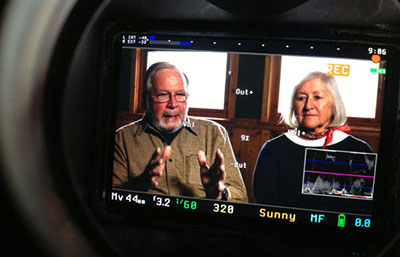
A Towering Task will be an unprecedented landmark documentary as a vehicle to create a baseline history of one of the greatest global emissaries of peace in history, capturing the early voices of the Peace Corps before they fade away. We will take a closer look at what the Peace Corps means to the US and the world today, and we will discuss where this small agency with great ideals should go from here. In doing this we will usher in a new era of possibility for the Peace Corps in today's context. In 1960, over 50 years ago, Senator John F. Kennedy challenged students at the University of Michigan to serve their country in the cause of peace. Since 1961, the Peace Corps has had a tremendous impact not only on the 220,000 Americans who have served as volunteers, but also on 140 countries around the world. Despite this global reach, many Americans today have no idea that the Peace Corps still exists.
This documentary will tell the story of the Peace Corps in a new way, honoring its rich history while highlighting its tremendous impact on other countries and the citizens and leaders of those countries. It will consider the role of this agency in the 21st century.
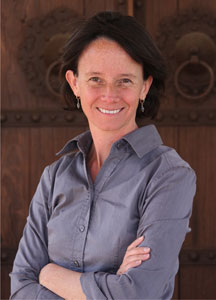
Alana DeJoseph has worked in video and film production for over 20 years. She has worn many hats as producer, director, videographer, and editor, but her heart has always been in documentaries. Between 2003 and 2005,
she was associate producer of the PBS documentaries The Greatest Good (about the U.S. Forest Service) and Green Fire (about conservationist Aldo Leopold). The Greatest Good appeared at 15 film festivals with screenings in 35 states, winning numerous awards, including the CINE Golden Eagle Award and finalist designation for the Annual Telly Awards. Green Fire appeared in 29 festivals from Colorado to India and New Zealand. Still airing on public television, it was awarded an EMMY, Telly Awards Bronze and a CINE Golden Eagle Award, among others.
Being a Returned Peace Corps Volunteer herself, she couldn't help but think that just such an in-depth, comprehensive documentary was needed for the Peace Corps.
Alana says: "In a time when the American public either has a very antiquated notion of the Peace Corps,informed by an almost mythological awe of the 60s, or is not even aware that the agency still exists, it is high time to bring this unique organization back into the public discourse, to raise the level of the discussion from quaint to crucial."
MoreScene: Republic of Mali, West Africa, 1993. Twenty-three year old Alana DeJoseph followed the village midwife through the African night with only a kerosene lantern to light winding paths leading to a small, round, mud hut where a young Malian woman labored stoically. Inexperienced, scared, and resolute, Alana did more than show up as a Peace Corps volunteer; she was a woman crossing a cultural bridge during one of the most unifying times in women's lives: childbirth.
With over 220,000 chosen Americans having invested their youthful idealism and fine minds in the Towering Task of Peace since 1961, this snapshot of the Peace Corps experience is one of millions shared by a declining number of souls who call the Peace Corps the most profound and transformative experience of their lives. New graduates brimming with potential, they thought they would change the world; by Peace Corps design, the world changed them.
In response to the Cold War threat and a race for global favoritism over Russia, the Peace Corps was founded by President John F. Kennedy as an international cultural bridge, particularly among developing countries lacking infrastructure and vulnerable to oppression. The Camelot ideal of peace was a beacon of hope for an increasingly cynical youth of America, including young Alana.
From a perch of relative privilege, Alana attended Washington and Lee University, an environment at the time known for developing the next generation of business entrepreneurs. Yet a passionate business school professor noticed her shining eyes as he described engagement in the world, not as a periphery concept, but at the core of living a fully expressed life. He suggested the Peace Corps, and Alana, like so many of her American compatriots, applied for the ride of her life.
Since its inception, the Peace Corps has served in 140 countries, many of which became stable global citizens and US allies, Superpowers and peace brokers. It has led the charge on global initiatives like food security, disease treatment and prevention, and gender equity. These efforts went on to have an even greater impact through educated leadership: In Africa alone, Peace Corps volunteers were the initial teachers to twelve students who went on to become top political leaders. In the face of opposing messages, their personal experience of the United States afforded unprecedented understanding and connectedness, and a shared vision of collaboration and peace.
The global impact of the Peace Corps is overwhelming. For over fifty years volunteers have been successful in meeting three main goals: Meet the need for trained men and women in developing countries; promote an accurate and accessible view of Americans throughout the world; and illuminate generations of Americans on the universality of the human experience among all peoples, regardless of race, religion, and geography.
But if you ask Returned Peace Corps Volunteers (RPCV) how the experience impacted their lives, invariably they tell stories of knowledge transformed into wisdom, western idealism transformed into humility, and above all, a deep connection and grace that bridges cultures to this day. Now awakened world citizens, they embody a loyalty to humanity while identifying as Americans, and they take their roles as engaged "super citizens" to heart.
As a celebrated documentarian with a powerful journalistic ethic, Alana has become a steward, archivist, and catalyst for the Peace Corps, a role she considers sacred and urgent. To RPCVs, including Alana, the marginalization in the past several years of the Peace Corps is a form of blasphemy and a reflection of fading ideals; the overwhelming response among returned volunteers has been "Not on my watch." Within this community is a fierce determination to see the Peace Corps remain relevant and vital on the international stage and in the intimacy of the informed American dining room.
For Alana, that has taken the form of producing and directing an unprecedented landmark documentary not only as a vehicle to create a baseline history of one of the greatest global emissaries of peace in history, including capturing the early voices before they fade away, but to usher in a new era of possibility in today's context. With countless opportunities already squandered, the stakes are staggeringly high.
To warriors like Alana DeJoseph, the global leaders she has assembled, and RPCV like you, the call to action is clear and urgent: Keep the Peace Corps relevant on the world stage by honoring its iconic past, while ushering in a New Era of Possibility.
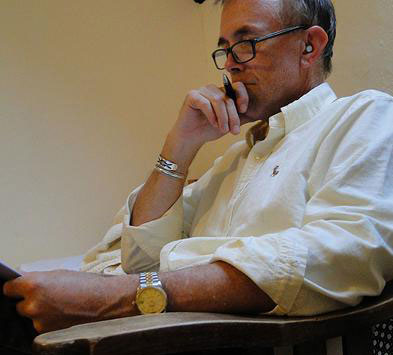
Composer Lance Bendiksen began his career journey mesmerized by the music of the New York Philharmonic conducted by Leonard Bernstein. Lincoln Center and Carnegie Hall soon became his musical dream and second home. Years later he would perform at Carnegie Hall as a pianist and recording artist during his critically acclaimed "Journey Home Tour". The tour donated funds to America's Homeless. As a composer and music producer Bendiksen won an Emmy for the PBS series "Life Wise" and his production team and clients have been nominated and won several Grammys. He has personally won over a dozen broadcast awards and has worked for Sony, Arista and RCA Records. His scoring career began in Denver Colorado, writing and scoring music for TV stations including ABC, NBC, and CBS affiliates as well as various PBS stations. In 2004 he wrote and scored the music for the highly acclaimed "The Greatest Good", a documentary film celebrating the hundred year anniversary of the US Forest Service. Bendiksen has also worked with many hit recording artists including Sarah McLachlan, and The Cowboy Junkies. Upon completing "The Greatest Good" Bendiksen worked on the "How to Save a Life" DVD for the hit band The Fray. Bendiksen expanded his musical influences working with the Cape Verdi record label MB Records and began to study the music of Africa, Brazil, and Portugal. Over the last several years Bendiksen has been active scoring and producing several music projects in Denver, London and at Sony / Tree in Nashville. "My passion for creating, scoring and recording music throughout the world runs deep. I'm very thankful for all the great people who've shared this exciting and ongoing journey with me and look forward to what lies ahead."